Document rack conditions, clarify load information and build a practical plan to address damage and improve warehouse safety.
Clear records of rack conditions with photos and observations.
Review of existing capacity labels and load information.
A practical plan focused on safety and operational needs.
Support for repairs and improvements based on inspection findings.
A documented inspection helps turn rack observations into actions your team can follow. Identify affected locations, record visible conditions and organize findings for review and follow-up.

Illustrative inspection report
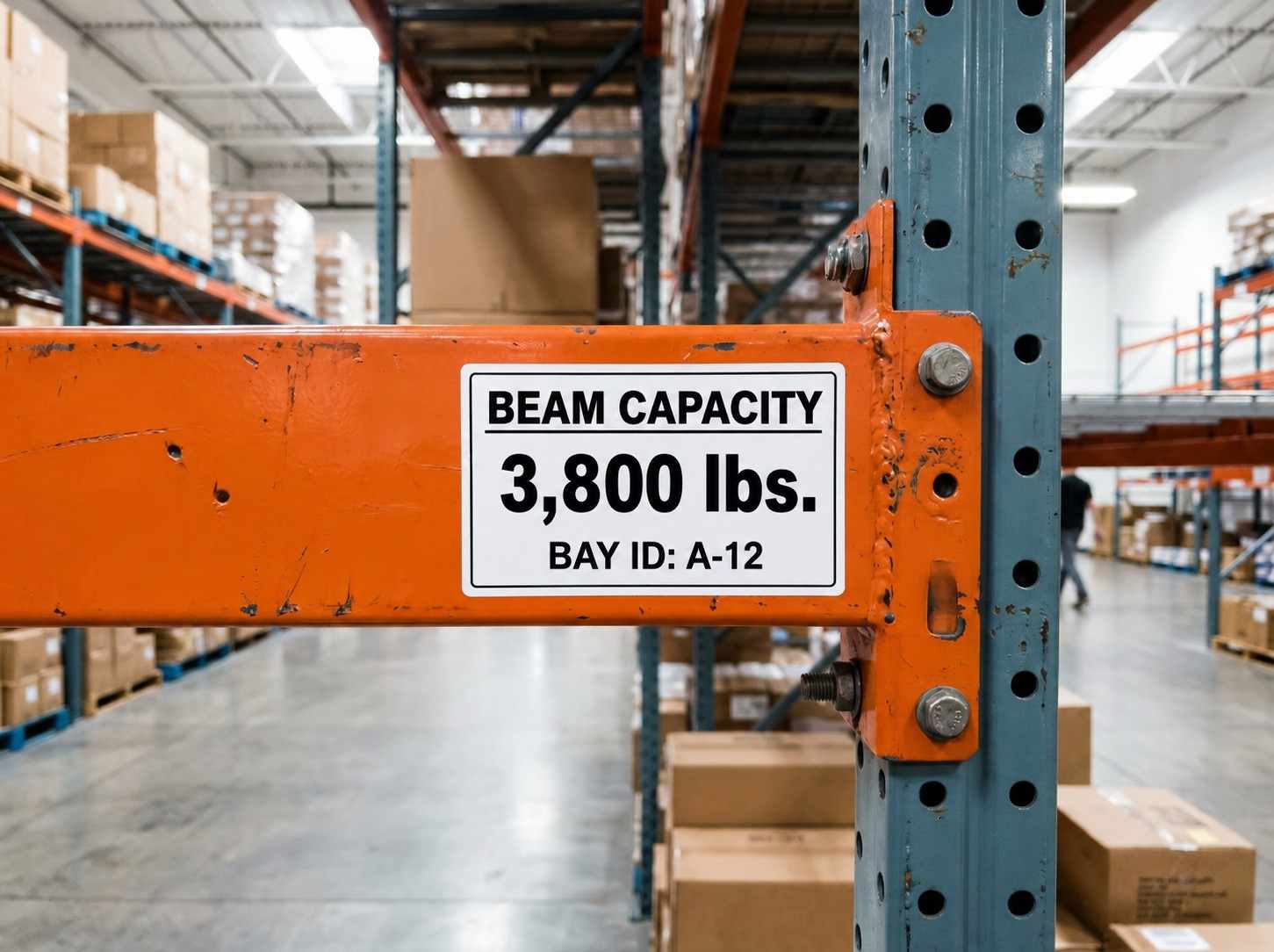
Illustrative label
Clear, durable capacity labels on beams help operators identify the load information for the rack configuration in use.
Capacity must be verified from manufacturer information or qualified engineering review; a visual inspection alone does not establish load capacity.
Get a practical improvement plan based on observed conditions and operational needs.
Identify damaged components for qualified evaluation and plan appropriate repair or replacement.
Consider upright protection, end-of-aisle guards, traffic routes and handling practices.
Review pallet condition, load placement, housekeeping and visibility of rack information.
Walk the racking, review visible conditions and capture photos and notes.
Organize observations, identify affected locations and prioritize risks.
Develop a plan based on operational needs and inspection findings.
Monitor progress and inspect as needed after improvements.
Restrict access to the affected area and have the condition assessed before continued use. Any unloading or repair should follow a site-specific safe plan.
Uprights, beams, connectors, bracing and anchors.
Capacity labels, rack configuration and load placement.
Pallet condition, traffic exposure and aisle housekeeping.
Share your rack layout, site photos and concerns.
Let's plan a documented inspection and practical next steps.